Why Lab Equipment Interfacing important.
Lab Information System
Laboratory Information System (LIS) allows you to effectively manage the flow of samples and patient data to improve lab efficiency. It improves access to quality diagnostic testing and provides accurate, timely information for patient care. Raster LIS helps in standardizing workflows, tests, and procedures while providing accurate controls of the process. Laboratory equipment (both unidirectional and bi-directional) may be integrated via Raster IoMT with Raster LIS to automate the collection of test data, ensuring they are properly calibrated. The fully integrated configuration tools help in adapting the software to end-user requirements without compromising on support or future upgrades. A key attribute of Raster LIS is the avoidance of platform dependencies.
interfacing LIMS to your lab instruments removes many complexities like manual entering of data every time or referring data from other instruments to the LIMS. This altogether saves a lot of time and effort when done by a LIMS rather than manually, also avoiding any human errors during data entry.
Salient features of Raster LIS
- Automated laboratory administration
- Reduced risk of error occurrence
- Integration of instruments and equipment
- Regulatory standards compliance
- Increase efficiency through better management
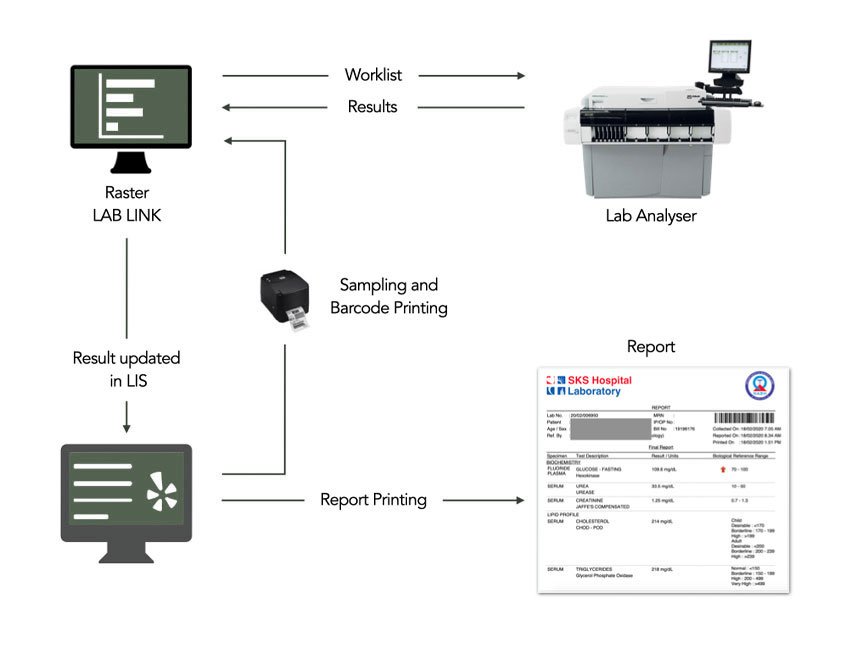
Lab Equipment Interfacing
Effective integration of laboratory equipment is crucial to improving productivity and efficiency in a hospital's laboratory environment. Integration of laboratory equipment with LIS was once a daunting task, until recent years with the development of laboratory equipment. With Raster’s advanced Lab Link application, equipment integration is a very reasonable and doable undertaking. The bottom line is that the LIS implementation project should include a prioritized plan to integrate as much laboratory equipment with the system.
Uni-Directional Equipment
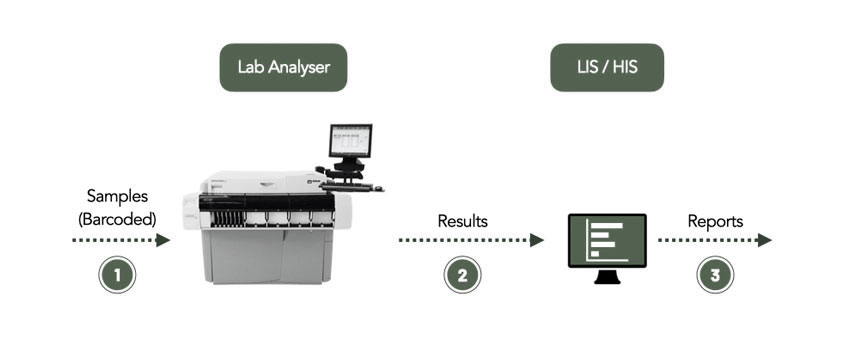
These equipment are able to output a data report and results file but do not have a facility to import information. Interfacing this equipment is done by the Lab Interface software picking up the data and updating the information/results into the LIS.
Bi-Directional Equipment
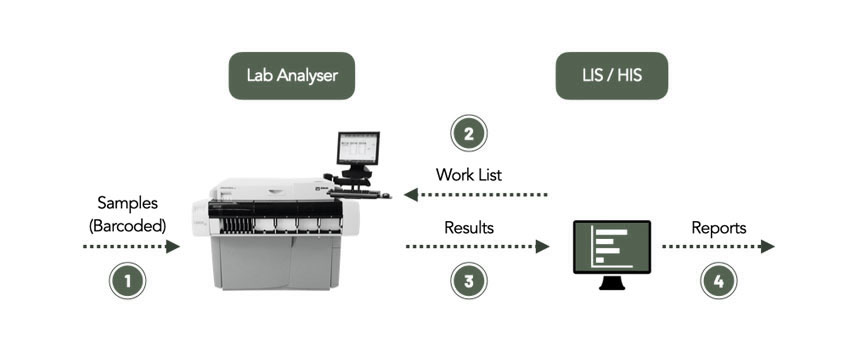
These equipment are able to both output data reports and results files. They can import data, information, worklists, commands/function calls, etc by reading the information on the barcode. The results are updated in the LIS without any human intervention.
Reasons To Interface Your Equipment To LIS
- Increase Productivity & Effectiveness: One of the best reasons to interface your instruments to your LIS is the increase in lab productivity and effectiveness it yields. Removing the manual entering of data, from the instrument to the LIS, saves a ton of time and effort. With bi-directional equipment, users will also eliminate the time required to enter the test information (Worklist), parameters, etc. into the equipment. Thus increasing productivity and sample throughput which play a key role in all quality controls and testing labs.
- Better Data Quality & Integrity: Another key reason to interface your instruments to your LIS is the increase in data quality and integrity that it yields. By removing the “human element” from the data transfer and entry equation, a huge source of error is removed. This removes transcription errors and will significantly increase the quality of your data.

Comments
Post a Comment